
Service Formats
We help companies grow faster, with more structure and confidence – through targeted executive support and strategic advisory. Our team steps in where internal expertise is limited, offering fractional COO, CFO, CTO, and CHRO roles, as well as full-cycle market research, business modeling, and digital transformation. We craft go-to-market strategies, build operational and financial models, automate workflows, implement BI systems, and prepare businesses for investment. This isn’t formal consulting – it’s hands-on work rooted in depth, speed, and results. We act as an external leadership resource that helps founders and teams make smarter strategic decisions, tighten business mechanics, and scale without chaos.
Fractional Hire
COO
part-time or project-based manager capable of performing the duties of a Chief Operating Officer (COO).
CFO
part-time or project-based manager capable of performing the duties of a Chief Financial Officer (CFO).
CHRO
part-time or project-based manager capable of performing the duties of a Chief Human Resources Officer (CHRO).
CTO
part-time or project-based manager capable of leading digital transformation initiatives or the implementation and harmonization of IT systems.
Marketing Research
Strategic Marketing Research
in-depth analysis of the external environment, market dynamics, customer behavior, competitors, and trends, with a focus on strategic insights. It includes assessment of market size and growth, demand structure, customer motivations, competitive advantages, and entry barriers. It helps identify opportunities and threats, supports positioning decisions, and informs the development of a realistic market strategy. It is used to guide product launches, market entry, scaling, or adjustments to the business model.
Market Strategy
system of decisions focused on selecting target segments, positioning, scaling, and adapting the product to market conditions. Based on strategic marketing research, it includes identifying key audiences, developing a unique value proposition, and selecting channels and go-to-market approaches. It helps concentrate resources on the most promising segments, improve product-market fit, and drive sustainable growth. It is used for launching new products, repositioning existing ones, and entering new markets.
Market strategy should not be confused with marketing strategy.
Business Modeling
Business Model
structured description of how a company creates, delivers, and captures value. It includes key components such as customer segments, value propositions, channels, customer relationships, revenue streams, key resources, key activities, key partners, and cost structure. It provides a high-level framework for aligning strategy, operations, and finance, and serves as a foundation for designing business logic, assessing sustainability, and identifying growth opportunities.
Operating Model
structure that defines how a business organizes its processes, teams, technologies, and resources to effectively create and deliver value to customers. It includes elements of operations strategy such as organizational structure, roles, business processes, IT systems, performance metrics, and cross-functional interactions. It aligns strategic goals with day-to-day execution and improves manageability and operational efficiency. It is used for business transformation, scaling, and optimization.
Financial Model
tool that represents a system of interconnected financial indicators reflecting the revenue structure, costs, investments, and profitability of a project or company. It includes cash flow forecasts, P&L, unit economics, scenario analysis, and key metrics such as CAC, LTV, EBITDA, and ROI. It enables the assessment of financial sustainability, growth planning, investment justification, and the identification of optimization opportunities. It is an essential component of a business plan and of fundraising preparation.
Business Processes
system of repeatable and interconnected tasks, operations, and functions aimed at delivering predictable and consistent results. They form the backbone of a company’s operations — from customer acquisition to service delivery and financial management. Each process includes inputs, outputs, stakeholders, resources, and a defined sequence of steps. Business processes enable greater efficiency, scalability, manageability, and execution quality. They are used to standardize, automate, and optimize the work of teams and the organization as a whole.
Business Plan
detailed document describing the business development strategy, market, product, business model, team, and operational and financial structure. It includes forecasts, unit economics calculations, risk assessment, and scenario planning. It serves as a foundation for managerial decision-making, attracting investment, and building the operating model. It enables a systematic approach to planning and provides a solid basis for communicating with investors, banks, and grant-making organizations.
Due Diligence
comprehensive assessment of a business conducted prior to an investment, acquisition, merger, or strategic partnership. It includes legal, financial, operational, and strategic analysis. It helps identify hidden risks, verify disclosed information, and make an informed managerial or investment decision. It addresses the lack of transparency, potential errors, and overvaluation of the company.
Pitch Deck
concise and persuasive presentation designed to introduce a business to venture investors. It includes key elements of the business plan: problem, solution, market, product, business model, team, metrics, growth strategy, and funding request. Unlike a business plan, a pitch deck emphasizes visual clarity, brevity, and impact to support initial decision-making. It helps quickly convey the project’s value, capture investor interest, and initiate further discussions.
Digitalization
Tool
IT solution that reduces (but does not fully eliminate) manual work within a specific task. It helps increase the speed of routine operations, addressing issues of low execution speed and high labor costs.
Automation
IT solution that fully eliminates manual work, resulting in the automation of a business process. It removes operational labor costs and minimizes the human factor, addressing inefficiencies and errors associated with manual execution.
ERP Integrations
integration of various data systems with each other. It enables end-to-end data and process management, addressing issues of information fragmentation and improving coordination between company departments.
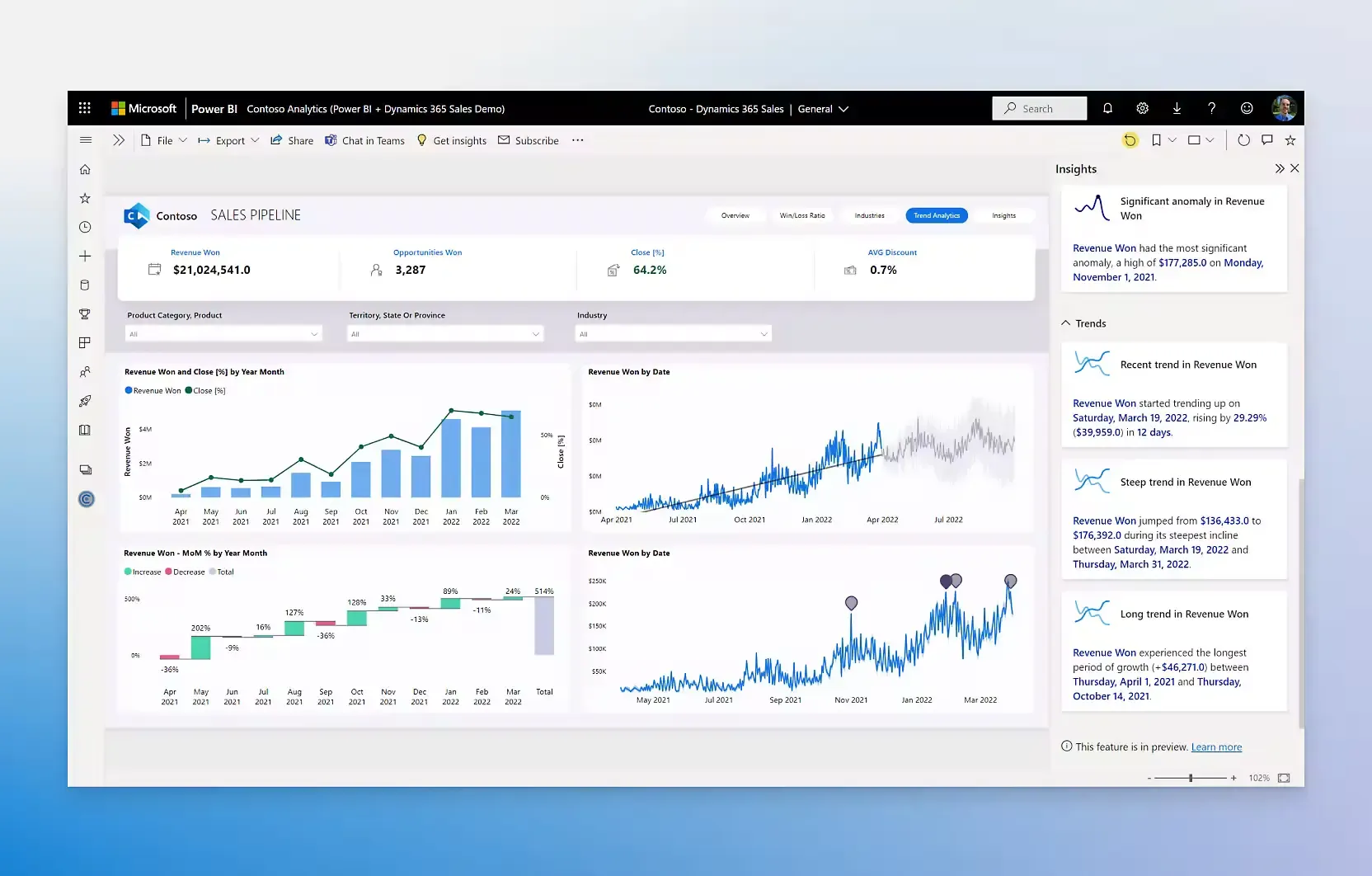
Business Analytics System
system that aggregates data from multiple sources, enabling the calculation of unit economics, margins, and ROI, the creation of end-to-end reports, and the generation of managerial insights. It supports data-driven decision-making, addressing the lack of transparency and of an information base for management decisions.
 Business Analytics System