
Competences
Here we describe the management disciplines our team covers.
Business Strategy
Strategic Marketing
Marketing Research
- PESTLE Analysis
document containing Political, Economic, Social, Technological, Legal, and Environmental (PESTLE) factors of the external environment that affect the feasibility of implementing a business strategy. It enables the identification of strategic risks and the search for global solutions to mitigate potential threats and leverage external opportunities.
- Trends Analysis
overview of external trends that may affect business competitiveness and development. It enables timely adaptation of strategy to future market conditions, addressing the issue of declining competitiveness.
- Industry Dynamics Assessment
comprehensive assessment of changes and growth (or decline) drivers within a specific industry. It includes analysis of competitive forces, emerging technologies, shifting customer preferences, and regulatory factors. It helps anticipate future opportunities and threats, reducing the risk of losing market position.
- Market Segmentation
document that lists, measures, and provides a basic analysis of target audience segments. It helps determine market size by segment, optimizing targeting and addressing the issue of insufficient audience coverage.
Market Strategy
- Competitive Positioning
definition of the market position of a product or company relative to competitors based on rational and functional factors such as price, features, channels, business model, and target segment needs. It helps identify competitive advantages and focus communication, addressing issues of weak positioning and lack of competitiveness.
- Unique Value Proposition Statement
precise description of the company’s advantages that fundamentally distinguish it from competitors and deliver unique value to the target audience. It helps focus efforts on competitive strengths, addressing issues of poorly defined value and low customer loyalty.
Brand Management
- Brand Positioning
description of the emotional and strategic position of the brand in the minds of the target audience. It lays the foundation for a strong brand identity, addressing issues of generic positioning and weak differentiation.
- Brand Identity
textual description of the specific semantic, visual, and verbal characteristics that convey the brand’s individuality and positioning. It defines expectations for the brand’s identity as expressed in its visual style and communication, addressing issues of inconsistent messaging and misalignment with marketing goals.
Strategic Management
Strategy Formulation
- SWOT Analysis
document that helps identify a competitive business strategy. It enables the assessment of a company’s strengths and weaknesses, as well as opportunities and threats, addressing strategic planning challenges and helping formulate advantages for subsequent positioning.
- Core Purpose, Mission, Vision, and Values
concepts that define the company’s fundamental reason for existence (Core Purpose), long-term direction (Mission), vision of the future (Vision), and guiding principles (Values). They help shape internal culture and motivation, addressing the problem of unclear goals and lack of inspiration within the organization.
- Competitive Advantage
identification of the unique resources, competencies, or market conditions that give the company a sustainable advantage over competitors. It helps the company achieve competitiveness, addressing the issue of a weak market position.
Strategic Control and Evaluation
- Business Analytics
management analytics system aimed at evaluating business performance using financial and operational metrics (such as revenue, EBITDA, CAC, LTV, and ROI). It belongs to the domain of strategic and operational management, covering the business model, channels, costs, and resources. It enables informed managerial decision-making, addressing the lack of growth opportunities and profit control, as well as inefficient resource management.
- Performance Indicator Hierarchy
document that defines and structures key performance indicators (KPIs). It enables the creation of a KPI decomposition system, addressing the lack of clear metrics for performance evaluation.
- KPI Map
document that assigns key performance indicators (KPIs), along with responsibility for them, to participants in business processes. It enables KPIs to be distributed among employees, addressing issues of insufficient accountability and staff motivation.
- Balanced Scorecard
concise report for senior management that allows the company’s health to be assessed, including by non-financial operational metrics. It enables monitoring of the company’s most important KPIs from multiple perspectives, addressing the limitations of one-sided performance evaluation and providing a comprehensive view of the business’s condition.
Innovation Management
Research & Development
- Competitive Intelligence
document containing detailed information about competitors that enables insights into their business strategies and vulnerabilities. It supports highly accurate strategic decisions to improve market positioning, addressing issues of suboptimal strategies and missed opportunities.
- Innovation Research (R&D)
document containing best practices and strong solutions used by competitors. It helps identify proven approaches to enhancing competitiveness.
Business Modeling
Value Chain Modeling
- Value Chain Network
description of a system of interconnected partners, suppliers, distributors, and customers that collectively create and deliver value to the end consumer. It helps uncover business model innovations and improve efficiency.
Business Model Design
- Business Lifecycle
document that defines the lifecycle stage of the business model. It helps assess whether the business has potential, addressing uncertainty in company development and growth planning.
- Business Model Canvas
block diagram of the core elements of a business model, including descriptions of Partners, Processes, Resources, Value Proposition, Customer Segments, Distribution Channels, Customer Relationships, Cost Structure, and Revenue Streams. It provides a concise yet comprehensive overview of the business, addressing issues of clarity and alignment within the business model.
Organizational Modeling
- Operating Model Canvas
block diagram of interdependent companies and the operational linkages between them. It improves the manageability of the business structure and helps achieve efficiency at the operating model level.
- Functional Profiles Canvas
document that defines the distribution of functions, risks, and assets within the operating model. It ensures efficient allocation of resources, addressing issues of function duplication and inefficient resource distribution.
Financial Modeling
- High-Level Financial Model
document that outlines the revenue and expense flows of the operating model. It ensures the model’s financial sustainability given the available resources, addressing issues of budget planning and financial risk.
Product Management
Product Strategy
- User Research Reports & Personas
research aimed at gaining a deep understanding of the audience and its needs. It enables the development of products that closely match customer expectations, addressing issues of poor product-market fit and low customer satisfaction.
- Value Proposition Canvas
diagram that aligns customer needs with product attributes. It helps build a value proposition that strengthens competitive advantages, addressing issues of weak positioning and lack of perceived customer value.
Portfolio / Lifecycle Management
- Competitive Analysis
document containing a detailed description and assessment of the competitive landscape for each product line. It helps identify promising market niches and propose unique products, addressing the lack of innovation and competitive advantages.
Product Analytics & Optimization
- Product Analytics
product analytics system focused on analyzing customer behavior and engagement metrics (such as DAU, Retention Rate, Churn, Activation Rate, and Feature Adoption). It belongs to the domains of product management and customer experience, covering funnels, features, and user interactions. It helps enhance product value and customer experience, addressing issues of low conversion, insufficient activation, and slow product growth.
Operations Strategy
Pricing Management
Pricing Strategy Formulation
- Pricing Strategy
strategy aimed at maximizing the company’s overall profit through tactical price adjustments across different products. It enables optimization of pricing policy to increase market share and profitability, addressing both financial and marketing challenges.
Corporate Governance
Governance Framework Design
- Organizational Structure
system that outlines management levels and coordination within the operating model. It helps streamline interaction within the organization, addressing issues of ineffective communication and the lack of clear hierarchies.
- RACI Model
table that defines the roles and areas of responsibility of participants in business processes. It helps align expectations among participants, addressing issues of role conflicts and unclear accountability.
Business Process Management
Process Design & Modeling
- Business Process Flowcharts and Descriptions
system that defines the sequence of interactions among participants in business processes. It enables the implementation of an optimal workflow, addressing issues of inefficient and unstructured operations.
- Internal Policies
document that defines work rules and quality standards for outcomes within a specific business process. It enables process standardization and improves work quality, addressing issues of non-compliance with external standards and poor quality of work.
Technology Management
Technology Strategy & Planning
- IT Architecture Diagram
visual representation of key IT systems, platforms, and their interconnections, reflecting the company’s technical infrastructure. It provides a holistic view of the technology ecosystem, enabling system integration optimization and minimizing the risks of technological fragmentation.
- Data Architecture Blueprint
document that describes the structure, flows, and data models within the organization, outlining methods for collecting, storing, and processing information. It enables the development of a comprehensive business intelligence system.
IT Governance & Security Management
- Security and Compliance Framework
system of policies, standards, and procedures aimed at ensuring information security and regulatory compliance. It provides reliable protection of corporate data, reduces legal and cyber risks, and strengthens investor confidence in the company’s long-term reliability.
Talent Management
Talent Acquisition
- Workforce Planning Analysis
forecast of workforce needs aligned with the company’s business strategy. It ensures that the size and qualifications of the staff meet current and future organizational demands, addressing issues of understaffing or overstaffing.
- Job Descriptions
document outlining the functions, tasks, authority, rights, duties, and responsibilities associated with a position. It ensures that employees clearly understand their role, addressing issues of role ambiguity and unclear accountability.
- Skills Gap Analysis
document that identifies the gap between an employee’s current and required skills. It helps determine training and development needs to improve staff qualifications, addressing issues of insufficient competence and preparedness.
Talent Development
- Competency Framework
approach that defines the key competencies and skills expected in a specific position to achieve professional and business goals. It enables standardization of personnel requirements and facilitates employee development planning, addressing issues of insufficient qualifications and misalignment between competencies and business objectives.
Organizational Behavior
Organizational Culture
- Corporate Standards
standards and regulations that define uniform requirements for employee behavior, service quality, and product offerings. They help maintain a high level of business ethics and consistent standards, addressing issues of inconsistent quality and misalignment with customer expectations.
- Onboarding, Retention and Recognition Program
system of business processes and documentation aimed at accelerating professional development. It facilitates effective onboarding of new employees, reduces staff turnover, and motivates employees to grow.
Digitalization
BI/BA & Software Development
IT Consulting
- IT Consulting
diagnostics of and recommendations on existing or required IT solutions. It helps optimize the IT infrastructure and improve its performance, addressing issues of technological lag and system inefficiency.
Tools, Automation and ERP
- Tool
IT solution that reduces (but does not fully eliminate) manual work within a specific task. It helps increase the speed of routine operations, addressing issues of low execution speed and high labor costs.
- Automation
IT solution that fully eliminates manual work, resulting in the automation of a business process. It removes operational labor costs and minimizes the human factor, addressing inefficiencies and errors associated with manual execution.
- ERP Integrations
integration of various data systems with each other. It enables end-to-end data and process management, addressing issues of information fragmentation and improving coordination between company departments.
Business Intelligence & Business Analytics
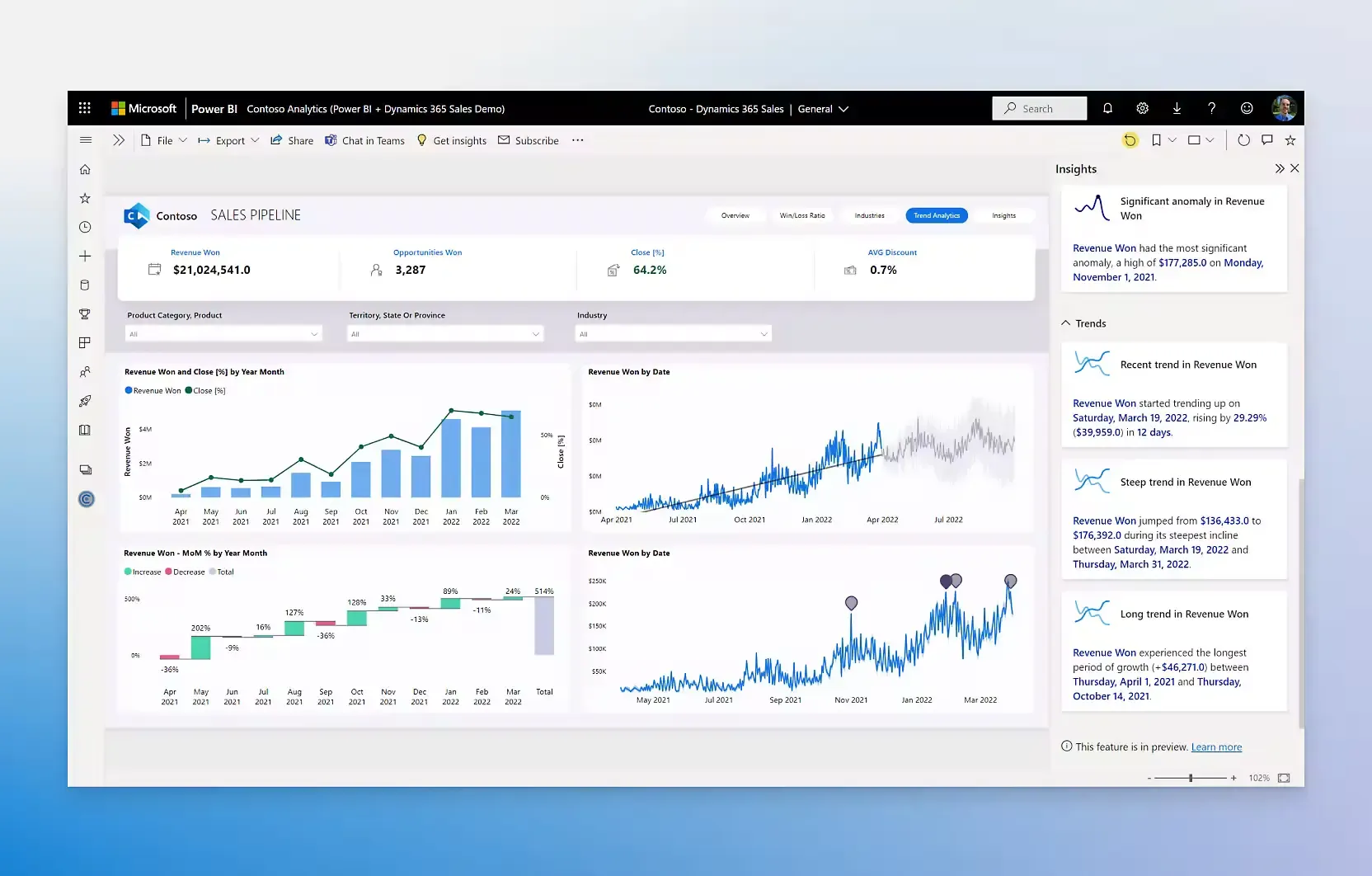
- Business Analytics System
system that aggregates data from multiple sources, enabling the creation of end-to-end reports and the generation of managerial insights. It supports data-driven decision-making, addressing the lack of transparency and of an information base for management decisions.
- Business Analytics Reports
reports within a business intelligence system that answer managerial questions. They help identify trends in data, addressing the lack of timely signals of emerging issues.
 Business Analytics System